
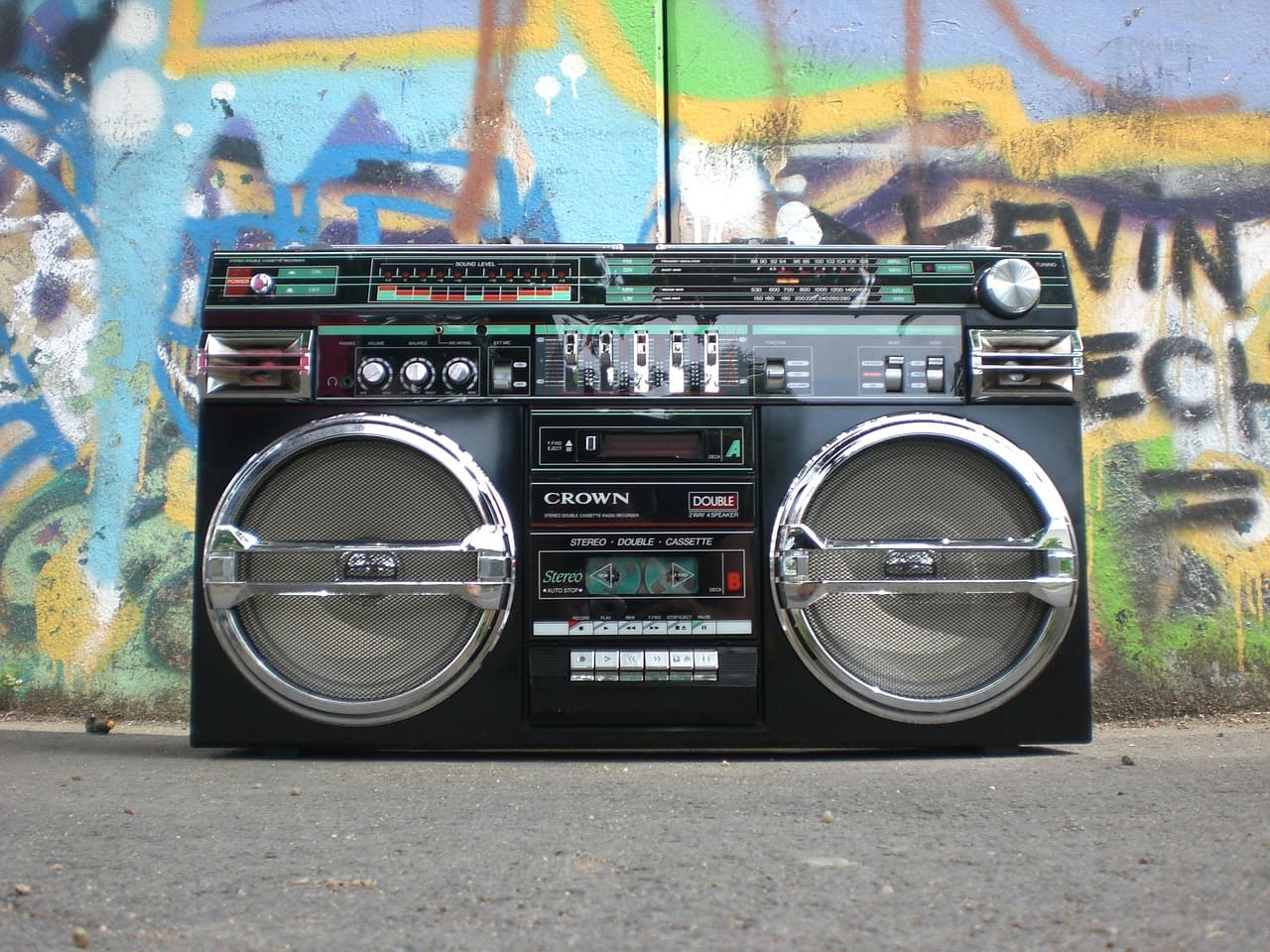
The 1980s marked the explosive rise of a genre that would soon reshape music, language, fashion, and storytelling. 1980s rap music grew from block parties, street battles, and community-driven creativity into a powerful cultural movement with global influence. What began as rhythmic spoken word over breakbeats quickly evolved into a bold new form of expression, blending rhythm, poetry, and personality. Unlike the polished pop and guitar-driven 80s rock songs dominating radio at the time, early rap introduced raw narratives, infectious beats, and a grassroots energy that resonated with young listeners everywhere. The decade became a defining moment in music history, establishing rap and hip hop as creative forces that continue to influence today’s artists.
The Sound and Style of Early Hip Hop
At its core, 80s rap was about rhythm, community, and authenticity. DJs created extended breaks using vinyl turntables, looping percussion-heavy sections to give MCs space to perform. These breaks became the foundation for 80 hip hop, shaping the sound of countless parties, park gatherings, and underground venues. Early MCs developed call-and-response routines, playful rhymes, and competitive verses that showcased skill, humor, and stage presence.
As the decade progressed, technology helped push the genre forward. Drum machines, samplers, and synthesizers gave producers new tools to craft beats with punch and personality. Many 80 rap songs became instantly recognizable due to their strong bass lines, crisp snare hits, and catchy hooks. While the production was simpler than later decades, the creativity was unmistakable. Artists experimented with funk, disco, electronic elements, and soul samples, ultimately creating the signature sound of early hip hop.
Lyrically, 1980s rap ranged from party anthems to socially conscious storytelling. Some tracks celebrated dancing, neighborhood pride, and good times, while others addressed inequality, urban life, and community struggles. The dual nature of these messages helped the genre resonate with diverse audiences and set the stage for hip hop’s evolution into a powerful tool for cultural commentary.
Pioneers Who Defined the Era
A variety of groundbreaking artists helped shape 1980s rap music into an art form. Some were known for clever rhymes and charismatic delivery, while others pushed boundaries with political messages or innovative production styles.
Artists representing the party scene brought upbeat energy to clubs and early music videos. Their tracks relied on catchy rhythms and repetitive hooks, establishing a fun, danceable vibe that helped bring rap into the mainstream. Meanwhile, socially conscious performers elevated hip hop with powerful verses that challenged injustice and highlighted real-world issues.
Another influential group of artists experimented with fast flows, storytelling techniques, and vocal styles that would later inspire entirely new subgenres. These innovators gave depth and character to 80 hip hop, helping the genre grow beyond simple rhyme patterns into something more complex, emotional, and enduring.
By the late 1980s, rap music had expanded across the United States and beyond. Record labels began signing more artists, music videos spread the style internationally, and fans embraced hip hop fashion, slang, and dance. Despite competition from pop stars and guitar-heavy music, rap held its ground and continued to evolve.
Themes, Culture, and Legacy
The impact of 80’s hip hop songs stretched far beyond sound. The decade introduced breakdancing, graffiti art, turntablism, and early hip hop fashion as essential cultural elements. Baggy tracksuits, gold chains, kangol hats, and high-top sneakers became visual symbols of the movement. The culture encouraged confidence, creativity, and self-expression, empowering communities to shape their own artistic identities.
Even today, many foundational 80 rap songs remain influential. Producers still sample beats from the era, while modern artists reference early pioneers as inspiration. Movies, documentaries, and retro celebrations continue to highlight the power and originality of the eighties.
Perhaps the most remarkable aspect of the 1980s hip hop era is its diversity. From lighthearted dance tracks to politically charged anthems, the decade offered something for everyone. Its legacy paved the way for the complex, global industry hip hop has become — a movement that began with simple beats, passionate voices, and the belief that anyone could step up to the mic.
Conclusion
The rise of 1980s rap music transformed not only the sound of a decade but the course of popular culture. Through innovative production, powerful lyrics, and charismatic performances, early hip hop artists built the foundation for one of the most dominant genres in the world. Whether celebrating neighborhood pride, delivering sharp social commentary, or crafting unforgettable party hits, the pioneers of 80 hip hop helped define what rap would become. Their influence remains woven into modern music, fashion, and storytelling, proving that the spirit of the eighties still echoes today.